 Domains SearchSearch available domain names and claim yours in just a few clicks.
 .GH DomainsFind and register a trusted .gh domain for your business or idea.
 Web HostingAffordable web hosting solutions designed for performance, uptime, and scalability.
 cPanel HostingManage your website without the stress. cPanel hosting gives you everything in one place.
 Reseller HostingCreate, manage, and grow your hosting clients using reliable reseller hosting tools.
 Windows HostingWindows hosting that works smoothly with Microsoft frameworks and applications.
 Email HostingProfessional email hosting that keeps your business communication reliable and secure.
 WordPress HostingFast and secure WordPress hosting optimized for smooth performance and easy management.
 Affiliate ProgramEarn commissions by referring customers to our hosting and domain services.
 .COM Domains
 All DomainsFind the right Ghana domain for your brand and lock it in fast.
 Domain TransferMove your domain to us with a smooth, secure transfer process.
 Whois LookupCheck domain ownership and registration details instantly with our WHOIS lookup.
 SSL CertificatesSecure your website and protect your visitors with trusted SSL certificates.
 VPS HostingUpgrade to VPS hosting today and enjoy better speed, uptime, and flexibility.
 Managed VPSManaged VPS for businesses and developers who want full control without server management worries.
 Dedicated ServersGet maximum speed and reliability with dedicated servers built for serious websites and apps.
 AI Website BuilderStart your website today with our AI builder and go live in minutes.
 Online ShopStart selling online today with your own professional online shop.
 Web Design ServiceProfessional web design services that make your brand stand out online.
 Local SEO
 BlogHelpful articles, tutorials, and updates for building your online presence.
 Contact UsNeed help or more information? Connect with us anytime.

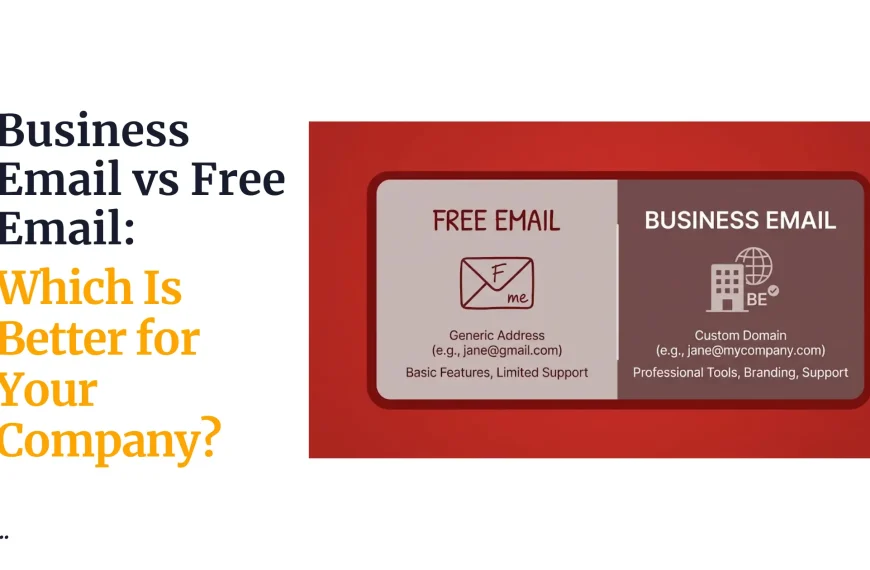
There is a real difference between sending a message from [email protected] and sending it from [email protected].
Both can technically get the job done, the email arrives either way, but only one of them tells the recipient anything about who they are actually dealing with.
A free email address puts a business behind someone else’s domain.
A business email address puts the company’s own name front and center, on every message it sends.
This article looks at the practical benefits a business gets from moving its email onto its own domain, rather than leaning on a free provider indefinitely.
Before getting into those benefits, it is worth clarifying one thing: a business email address is only one part of a bigger setup.
Behind every [email protected] address sits an email hosting service, the infrastructure that actually stores, sends, and receives the mail.
The address is what people see. The hosting is what makes it work.
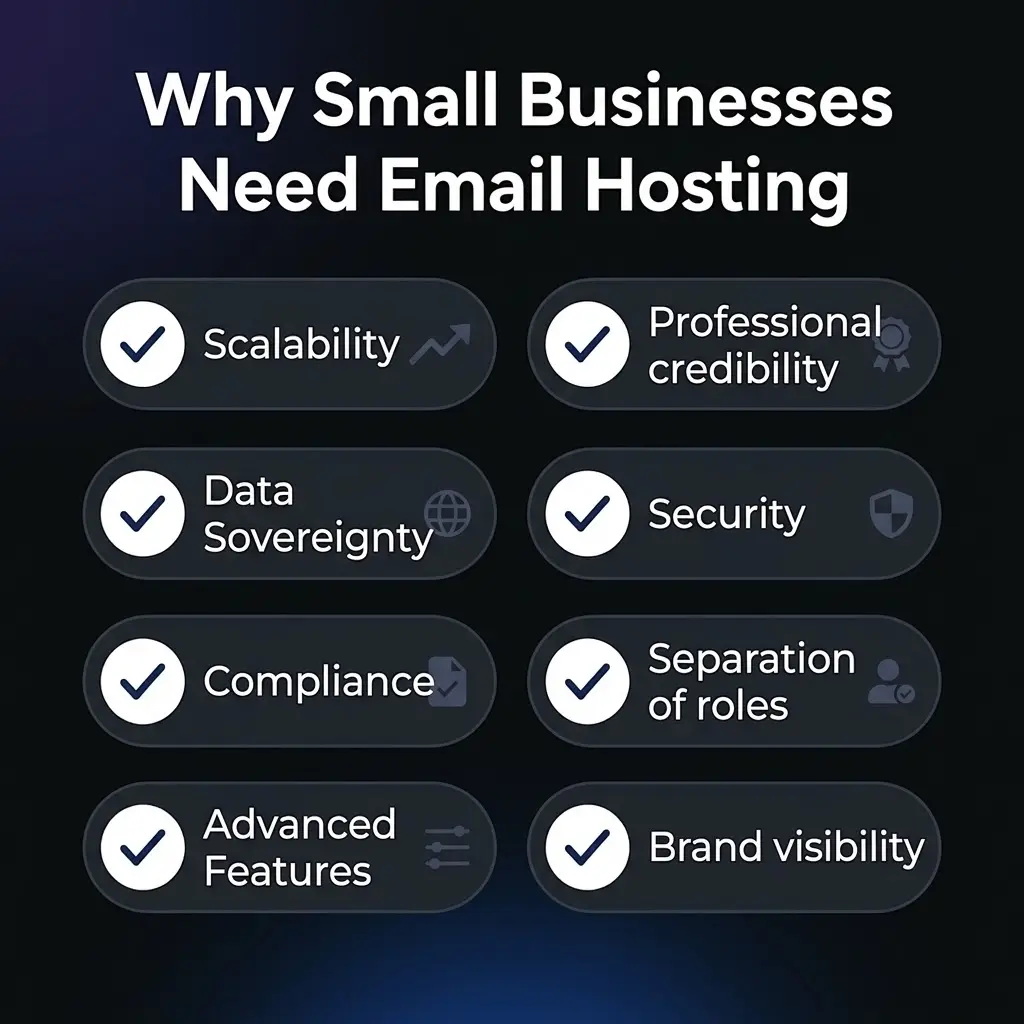
10 Benefits of Using a Business Email Address
1) Builds a More Consistent Business Identity
When every email sent from a business uses the same domain, something small but noticeable happens, the company starts to look like one organization rather than a loose collection of individuals.
Employees across departments can all use consistent addresses under the same domain, whether it is sales@ writing to a lead or an individual staff member writing to a partner.
That consistency creates a unified identity across every email conversation the business has, even ones happening in parallel across different teams.
2) Makes Your Business Easier to Recognize
A business email address puts the company name directly into the address itself.
That means a recipient can identify the organization without relying purely on the sender’s display name, which can be edited, misspelled, or missing entirely depending on the email client.
This is very critical for businesses that regularly communicate with customers, suppliers, and partners who need to know at a glance who they are hearing from, especially when a message lands among dozens of others in a crowded inbox.
3) Supports Customer Trust
A domain-based address gives customers clearer information about who they are actually communicating with.
Seeing @yourbusiness.com rather than a generic free domain tells a recipient the message is tied to a real, identifiable organization, not just an anonymous account that could belong to anyone.
That said, it would be overstating things to say a business email address automatically makes a company trustworthy or prevents scams outright.
Domains can still be spoofed, and fraudulent messages can still be crafted to look convincing.
Customers receiving unfamiliar messages, even ones from a proper business domain, may still want to verify who sent them before acting on anything sensitive.
A business email address is a signal of legitimacy, not a guarantee of it.
4) Gives You More Control Over Business Email Accounts
With a business domain, a company can create as many addresses as it needs, for different employees and different departments. Examples include:
- accounts@
- sales@
- support@
An administrator can manage these accounts centrally, setting up a new address when a staff member joins, and removing or reassigning it when someone leaves.
That level of control is difficult to replicate across a scattered set of personal, free email accounts.
5) Separates Business and Personal Communication
A business email address gives employees a clear line between their personal inbox and their work correspondence.
That separation makes it easier to keep track of what actually counts for the business, customer enquiries, invoices, orders, internal updates.
Without those messages getting buried among personal messages, newsletters, or unrelated accounts.
6) Allows Multiple Addresses Under One Domain
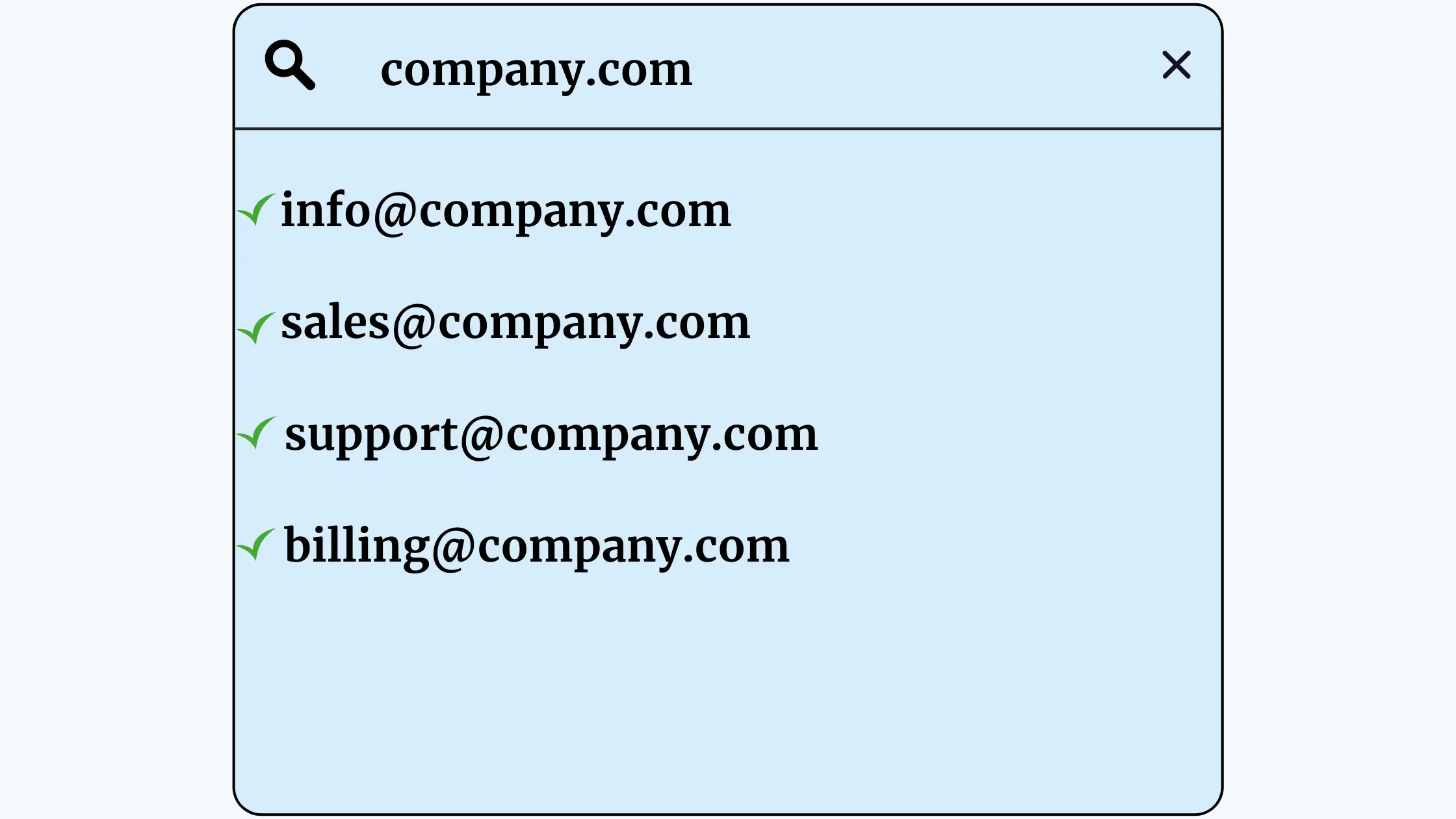
One of the more practical benefits of owning a domain is being able to run several addresses off it, each built around a different function.
A single company might use:
Role-based addresses like these help direct incoming messages to the right team automatically.
A customer emailing billing@ does not need to know which specific person handles invoices, they just need the right department to receive it.
7) Helps Maintain Brand Consistency Across Employees
Beyond departmental addresses, individual employees also benefit from a standard naming convention, whether that is [email protected] or the slightly more scalable [email protected].
Picking one format and sticking to it means anyone inside or outside the business can reasonably guess an employee’s email address without needing to ask.
As a business adds more employees, that consistency becomes increasingly useful, it avoids the confusion of five different naming styles floating around under the same domain.
8) Provides Access to Email Management Features
Depending on the email hosting service a business uses, a business email address often comes with a set of management features attached, such as:
- Spam filtering
- Email forwarding
- Autoresponders
- Webmail
- Mailbox management
- Storage controls
- Security and authentication features
These features vary quite a bit by provider and by plan, so it is worth checking exactly what is included before assuming a particular tool will be available.
A basic plan might cover the essentials, while a more advanced one adds extra storage, stronger security, or more granular account management.
9) Gives the Business More Ownership of Its Email Identity
A business email address ties the company’s email identity to its own domain rather than to a free provider’s domain, which the business has no real ownership over.
That said, owning the domain is not the same as owning every email account or hosting service connected to it.
The domain registration and the email hosting are often separate services, sometimes from different providers.
And it’s critical to keep both under proper business control, with up-to-date registration information and access held by the right people.
Losing track of a domain renewal, for instance, can disrupt every email address built on top of it, regardless of how well the hosting itself is managed.
10) Supports Business Growth

A business domain does not need to be rebuilt as the company grows, it just gets used more fully.
A company might start with a single [email protected] address.
And over time expand into sales@, support@, accounts@, and individual addresses for each new employee, all without ever needing to change the domain itself.
The structure grows with the business rather than needing to be replaced by it.
Are Business Email Addresses Only for Large Companies?
Not at all.
Small businesses, freelancers, agencies, schools, nonprofits, and organizations still finding their footing can all use domain-based email just as easily as a large corporation.
The number of mailboxes involved can start small, sometimes just one or two, and grow only when the business actually needs more, rather than being set up all at once.
It is worth being clear here too: not every small business needs multiple departments, layers of role-based addresses, or an elaborate email infrastructure from day one.
A freelancer or a two-person shop might do perfectly well with a single [email protected] address for a long while.
The benefits above are not a checklist that every business has to fully implement immediately, they are simply what becomes available once a business has the right pieces in place.
And that really is the underlying point running through all ten benefits: none of them come from the address alone.
They come from the combination of a business domain and an email hosting service sitting behind it, working together to make professional, branded, well-managed email possible.
If your business is ready to move past a free email address and start using something built around your own domain, Truehost’s email hosting plans offer a practical way to get there.
With the mailboxes, storage, and management tools needed to support a business at whatever size it happens to be right now.