 Domains SearchSearch available domain names and claim yours in just a few clicks.
 .GH DomainsFind and register a trusted .gh domain for your business or idea.
 Web HostingAffordable web hosting solutions designed for performance, uptime, and scalability.
 cPanel HostingManage your website without the stress. cPanel hosting gives you everything in one place.
 Reseller HostingCreate, manage, and grow your hosting clients using reliable reseller hosting tools.
 Windows HostingWindows hosting that works smoothly with Microsoft frameworks and applications.
 Email HostingProfessional email hosting that keeps your business communication reliable and secure.
 WordPress HostingFast and secure WordPress hosting optimized for smooth performance and easy management.
 Affiliate ProgramEarn commissions by referring customers to our hosting and domain services.
 .COM Domains
 All DomainsFind the right Ghana domain for your brand and lock it in fast.
 Domain TransferMove your domain to us with a smooth, secure transfer process.
 Whois LookupCheck domain ownership and registration details instantly with our WHOIS lookup.
 SSL CertificatesSecure your website and protect your visitors with trusted SSL certificates.
 VPS HostingUpgrade to VPS hosting today and enjoy better speed, uptime, and flexibility.
 Managed VPSManaged VPS for businesses and developers who want full control without server management worries.
 Dedicated ServersGet maximum speed and reliability with dedicated servers built for serious websites and apps.
 AI Website BuilderStart your website today with our AI builder and go live in minutes.
 Online ShopStart selling online today with your own professional online shop.
 Web Design ServiceProfessional web design services that make your brand stand out online.
 Local SEO
 BlogHelpful articles, tutorials, and updates for building your online presence.
 Contact UsNeed help or more information? Connect with us anytime.

When people hear about online business, the first things that usually come to mind are freelancing, dropshipping, affiliate marketing, or becoming a content creator.
Those are all real paths, but they are not the only ones, and honestly, they are not even the most interesting ones for a lot of Ghanaian entrepreneurs.
A website does not have to be a shopfront for something you already sell elsewhere.
Sometimes the website is the business. It can collect bookings, connect buyers with sellers, take orders directly, sell access to useful information, or generate leads that get passed on to someone else for a fee.
Some of the best online business ideas in Ghana right now come from a fairly simple observation: plenty of transactions still happen through phone calls, WhatsApp groups, and scattered social media posts.
Turning that kind of messy, word-of-mouth process into something searchable and easy to buy from is where a lot of opportunity sits.
Below are ten online business ideas that can start relatively small in Ghana and grow as demand proves itself.
None of them require huge upfront investment or a massive platform on day one.
They just need a clear problem, a working website, and a willingness to start narrow before expanding.
1) Build a Local Supplier Directory for a Specific Industry
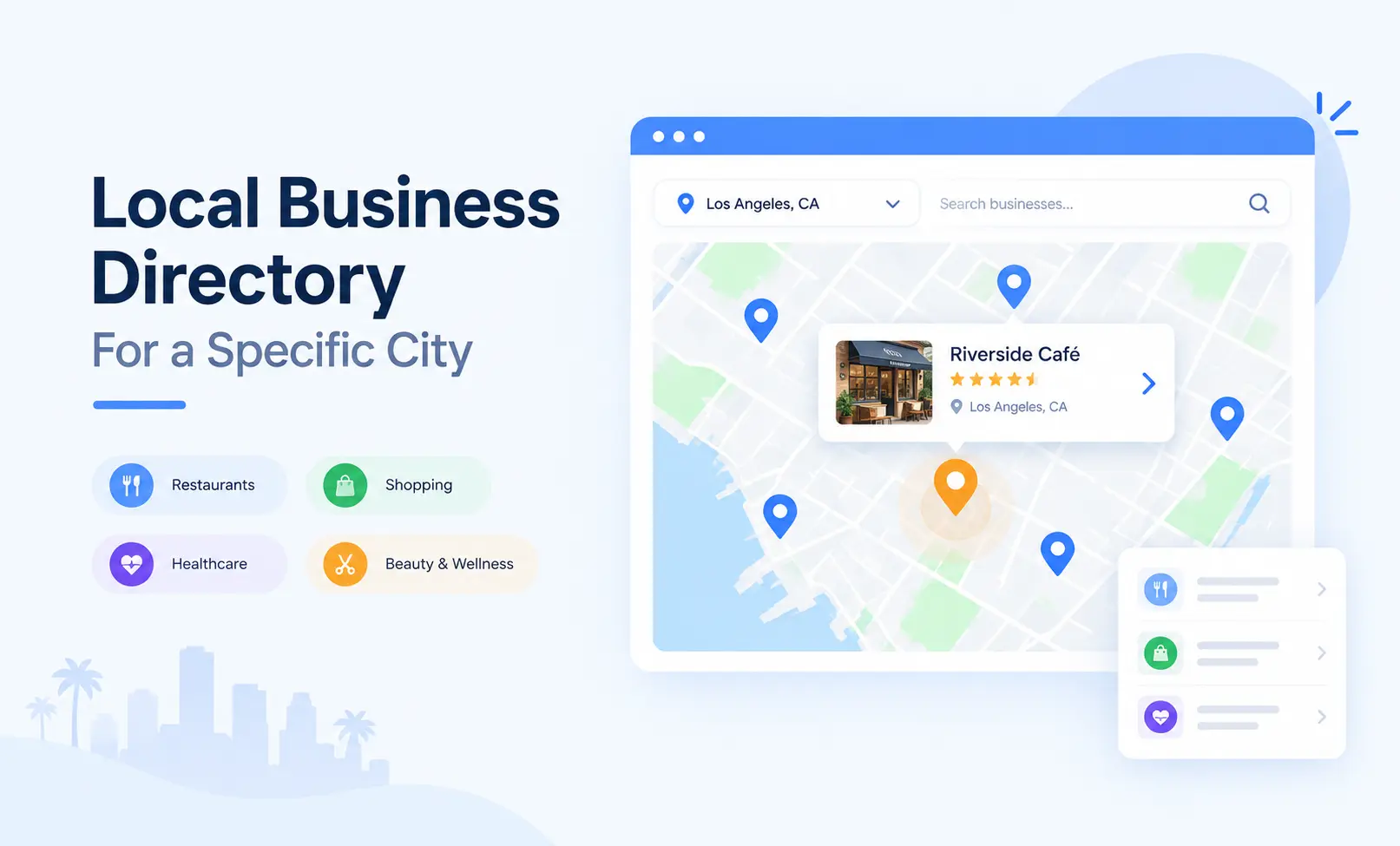
Instead of building another general directory that tries to list every business under the sun, pick one industry where buyers regularly need to compare several suppliers before making a purchase.
The website becomes the place where those buyers go first.
Possible niches include:
- Construction material suppliers
- Packaging suppliers
- Wedding and event vendors
- Restaurant equipment suppliers
- Poultry and livestock suppliers
- Printing and branding companies
- Furniture manufacturers
- School uniform suppliers
Let suppliers create profiles with their products, location, and contact details.
Add filters so buyers can search by location, product, or service category, and let customers request quotations directly rather than hunting down phone numbers.
Monetize through featured listings, supplier subscriptions, advertising, or paid leads. Start with one industry, get it attracting steady traffic, then expand.
2) Create a Price Comparison Website for One Product Category
Rather than building a large ecommerce store from scratch, build a website that answers a much narrower question: where can someone get this product at a good price?
Pick a category where buyers already compare sellers before deciding.
Good categories could include:
- Smartphones
- Laptops
- Solar equipment
- Building materials
- Home appliances
- Generators
- Office equipment
- Internet routers
Publish individual pages comparing current prices across different sellers, including specifications, seller details, and availability where you can get it.
Target product-specific searches like “iPhone 17 price in Ghana” or “50kg cement price in Ghana.”
Let retailers submit their own prices and products, and earn through sponsored listings, retailer subscriptions, advertising, or referral arrangements.
3) Start a Pre-Order Website for Hard-to-Find Products
Instead of spending heavily on inventory before knowing whether anyone will actually buy it, build a business around pre-orders.
Customers commit first, and you source based on confirmed demand rather than guesswork.
You could specialize in:
- Specialty baking equipment
- Replacement electronics parts
- Professional tools
- Craft materials
- Specialized beauty equipment
- Uncommon kitchen equipment
- Hobby supplies
Show the full price, required deposit, and expected delivery window clearly on every product. Set ordering deadlines for items sourced in batches, and let customers request products that are not currently listed.
Running WhatsApp alongside the website for order updates keeps customers informed without complicated notification systems.
Starting narrow, one product category where your sourcing knowledge becomes a genuine advantage, tends to work better than trying to cover everything at once.
4) Build a Rental Marketplace for Things People Only Need Occasionally
A lot of products are too expensive to buy outright for something you only need once or twice a year.
A rental marketplace connects the people who own these items with the people who need them temporarily.
Potential categories include:
- Cameras and lenses
- Projectors
- PA systems
- Camping equipment
- Event equipment
- Power tools
- Graduation gowns
- Party décor
- Baby equipment
Show daily, weekend, and weekly pricing clearly, and display real availability so people are not enquiring about something already booked out.
Let customers request specific rental dates, and be upfront about deposits, pickup locations, and delivery options.
You can either own the inventory yourself, or let other owners list their items and take a commission from every successful rental, keeping your own capital investment lower while you figure out demand.
5) Sell Ready-Made Business Documents for Ghanaian SMEs
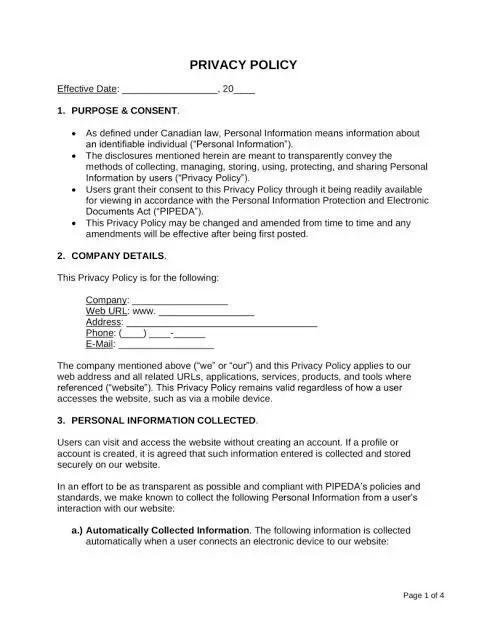
Rather than selling generic ebooks that could apply to any business anywhere, build a library of documents small businesses can download, edit, and start using right away.
The strongest version of this idea is organized around specific industries and the everyday tasks those businesses actually deal with.
Products could include:
- Invoice templates
- Quotation templates
- Stock management sheets
- Employee attendance sheets
- Expense trackers
- Social media calendars
- Restaurant costing sheets
- Salon appointment sheets
- Rent tracking spreadsheets
- Customer order forms
Package related templates together into bundles, a Restaurant Business Pack or a Salon Management Pack, for example, while still selling individual files for customers who only need one document.
Offer larger bundles at higher prices, and add new templates on a regular schedule so past customers have a reason to check back in.
This can eventually evolve into a membership giving access to the entire template library for a recurring fee.
6) Create a Hyperlocal Property Listing Website
Trying to cover every property in Ghana puts you head to head with established, well-funded property platforms from day one.
Instead, own a much smaller, more specific search market, student accommodation around one university, or rentals in one particular part of Accra.
Possible niches include:
- Student hostels around KNUST
- Apartments in East Legon
- Rentals around Spintex
- Rooms in Kasoa
- Short stays in one tourist destination
Display the actual rent and advance required wherever that information is available, and include the date each listing was last verified, since stale listings are a fast way to lose a visitor’s trust.
Show utilities, furnishing, location, and current availability, and remove properties no longer on the market instead of letting outdated listings pile up.
Charge landlords or agents for listings, verification, featured placement, or enquiries, and only expand into nearby areas once the original location is generating consistent traffic.
7) Create a Booking Website for One Local Service
Pick a service people currently find by asking friends, scrolling social media, or clicking through dozens of business pages one at a time.
Your website organizes the available providers and lets customers request the service from a single place instead.
Possible markets include:
- Home cleaning
- Laundry pickup
- Mobile car washing
- Makeup artists
- Photographers
- Event decorators
- Appliance repair
- Home tutors
Let customers specify their location, the service they need, and a preferred date, then route that request to suitable providers rather than forcing the customer to contact ten businesses individually.
Early on, matching requests manually is fine, there is no need to invest in automation before you know the demand is real.
Charge providers per lead, per completed booking, or through a monthly subscription, and add ratings and verified-provider profiles once the platform has enough activity for that trust layer to matter.
8) Start a Custom Gift Box Website
Instead of running yet another online gift shop selling individual items, build the business around complete, ready-made gift packages designed for specific people and occasions.
You could offer:
- Graduation boxes
- Birthday boxes
- New employee welcome boxes
- Mother’s Day packages
- Bridal boxes
- New baby packages
- Corporate appreciation boxes
- Long-distance gift packages
Let customers choose a budget first, then select products that fit it, and allow personalization like names, messages, and small custom touches.
Offer scheduled delivery for birthdays and other dates people plan around in advance, and build corporate packages that companies can order in bulk for staff or clients.
Seasonal landing pages built around Valentine’s Day, Mother’s Day, Christmas, and graduation season can capture steady search traffic tied to specific moments in the calendar.
9) Build a Farm-to-Business Ordering Website
Rather than competing in the crowded household grocery delivery space, focus on businesses that regularly buy agricultural products in bulk.
The website connects farmers or suppliers directly with restaurants, hotels, schools, caterers, and retailers.
The platform could list:
- Vegetables
- Fruits
- Eggs
- Poultry
- Grains
- Spices
- Processed agricultural products
Display available quantities and supplier locations clearly, and let businesses request bulk quotations rather than guessing at pricing.
Suppliers should be able to update what they currently have on hand, and organizing products by region helps buyers find suppliers near them.
Earn through commissions, supplier subscriptions, listing fees, or a margin on the orders you help coordinate.
And begin with a single product category or farming region before trying to cover the whole country.
10) Build a Paid Information Database for One Ghanaian Industry
Information itself can become a product when it is genuinely difficult or time-consuming to find.
Build a website that pulls together useful information scattered across different organizations, social platforms, and websites, then makes it searchable from a single place.
Potential databases include:
- SME funding opportunities
- Grants
- Scholarships
- Business tenders
- Wholesale suppliers
- Agricultural buyers
- Event venues and rates
- Training opportunities
- Manufacturing suppliers
Keep basic listings free so the site can attract search traffic and build an audience, then put advanced filters, alerts, downloads, or detailed contact information behind a paid account.
Send subscribers alerts whenever new opportunities matching their interests get added, and offer monthly, quarterly, or annual subscription options.
Freshness is what keeps people paying, so keeping information current has to be an ongoing priority, not something updated occasionally.
How to Choose an Online Business Idea That Can Actually Work
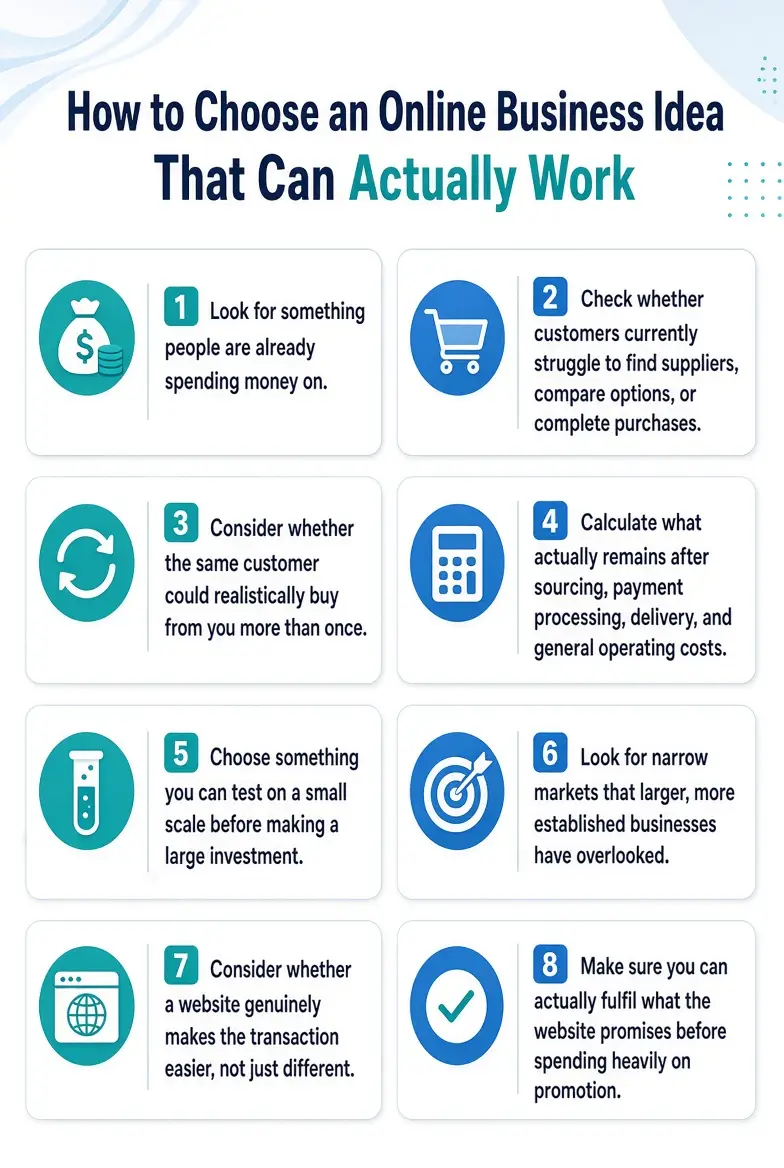
Rather than picking whichever idea sounds most exciting on paper, it helps to evaluate whether there is a genuine problem sitting behind it.
- Look for something people are already spending money on.
- Check whether customers currently struggle to find suppliers, compare options, or complete purchases.
- Consider whether the same customer could realistically buy from you more than once.
- Calculate what actually remains after sourcing, payment processing, delivery, and general operating costs.
- Choose something you can test on a small scale before making a large investment.
- Look for narrow markets that larger, more established businesses have overlooked.
- Consider whether a website genuinely makes the transaction easier, not just different.
- Make sure you can actually fulfil what the website promises before spending heavily on promotion.
None of the online business ideas above are guaranteed to work simply because they are listed here.
What makes any of them work is whether there is a real, underserved problem behind the idea, and whether you can consistently deliver on what the website promises.
Turn Your Online Business Idea Into a Working Website
Starting an online business in Ghana does not require building a huge, feature-packed platform right out of the gate.
Most of the ideas above can begin as a fairly simple website built around one core feature, the ability for a customer to browse, request, book, or buy, and everything else can be added once demand has proven itself.
That is really the honest starting point for any of these online business ideas: get the core transaction working first.
Whether that is a booking request, a quotation form, or a simple checkout, and let the website grow from there.
If you already have an idea in mind and need a site built around what your business actually sells or provides, Truehost’s web design service can help turn that idea into a working website rather than something stuck on a drawing board.
Get Your Business Website Designed by Truehost
FAQs
What online business can I start in Ghana with little capital?
A supplier directory, a booking website for one local service, or a paid information database need little upfront capital, since you are mainly connecting existing buyers and sellers rather than holding stock.
Can I start an online business in Ghana without keeping stock?
Yes. Directories, booking platforms, rental marketplaces where owners list their own items, and information databases can all run without you holding any inventory.
Do I need a website to run an online business in Ghana?
You can start with social media or WhatsApp, but a website gives your business a permanent, searchable home that is not dependent on any single platform’s algorithm, and it becomes essential once customers want to book, request, or pay directly.
How much does a business website cost in Ghana?
Costs vary with complexity, a simple booking or directory site costs about GH₵987.53 which less than a full marketplace with accounts, payments, and listings. Getting a quote based on your specific idea is the fastest way to know what to budget.
What should I sell online in Ghana?
The strongest options are usually things people already buy through informal channels, phone calls, WhatsApp groups, or social media, where a website can make the process faster for both sides.
How can customers pay for products or services on my website?
Mobile money and card payments through a local payment gateway are the most common setup, often alongside the option to pay on delivery or on completion of a service.
Can I connect WhatsApp to my business website?
Yes, many of the ideas above work well with a WhatsApp button or integration alongside the website, letting customers move from browsing to a direct conversation.
How do I test an online business idea before investing money?
Start with a simple version covering just one product category, one service, or one location, and see whether real enquiries or orders come in before expanding.
Can I start an online business from home in Ghana?
Yes, most ideas covered here, directories, booking platforms, information databases, pre-order sites, can be managed from home with a laptop, a phone, and internet access.
What features should an online business website have?
At minimum, a clear way for customers to browse or search what you offer, a way to request, book, or buy directly, and a way to reach you with questions. Accounts, reviews, and advanced filters can be added once the core business is proven.