 Domains SearchSearch available domain names and claim yours in just a few clicks.
 .GH DomainsFind and register a trusted .gh domain for your business or idea.
 Web HostingAffordable web hosting solutions designed for performance, uptime, and scalability.
 cPanel HostingManage your website without the stress. cPanel hosting gives you everything in one place.
 Reseller HostingCreate, manage, and grow your hosting clients using reliable reseller hosting tools.
 Windows HostingWindows hosting that works smoothly with Microsoft frameworks and applications.
 Email HostingProfessional email hosting that keeps your business communication reliable and secure.
 WordPress HostingFast and secure WordPress hosting optimized for smooth performance and easy management.
 Affiliate ProgramEarn commissions by referring customers to our hosting and domain services.
 .COM Domains
 All DomainsFind the right Ghana domain for your brand and lock it in fast.
 Domain TransferMove your domain to us with a smooth, secure transfer process.
 Whois LookupCheck domain ownership and registration details instantly with our WHOIS lookup.
 SSL CertificatesSecure your website and protect your visitors with trusted SSL certificates.
 VPS HostingUpgrade to VPS hosting today and enjoy better speed, uptime, and flexibility.
 Managed VPSManaged VPS for businesses and developers who want full control without server management worries.
 Dedicated ServersGet maximum speed and reliability with dedicated servers built for serious websites and apps.
 AI Website BuilderStart your website today with our AI builder and go live in minutes.
 Online ShopStart selling online today with your own professional online shop.
 Web Design ServiceProfessional web design services that make your brand stand out online.
 Local SEO
 BlogHelpful articles, tutorials, and updates for building your online presence.
 Contact UsNeed help or more information? Connect with us anytime.

Plenty of Ghanaian businesses sell every day through WhatsApp, Facebook, Instagram, and referrals.
That works well, until a customer wants the full picture and has to scroll through months of posts to find one price.
A website gives your business a central place to show everything it offers.
Customers can find your services, view products, check your details, request quotes, or place orders without waiting for a reply at midnight.
This article covers more than 100 small businesses that need a website in Ghana.
Some are small local operators working from a single shop. Others are growing companies ready to reach wider markets.
The list is split into ten groups, and each group explains what the website should show and what visitors should be able to do.
After the list, you will see what a site can do for you and how to set one up.
You do not have to read every group.
Jump to the one that matches your trade, then skim the others for ideas.
You may spot a related business that could send customers your way.
Many owners also find that seeing the same few pages repeated across industries makes the whole job feel less scary.
1) Retail and E-Commerce Businesses
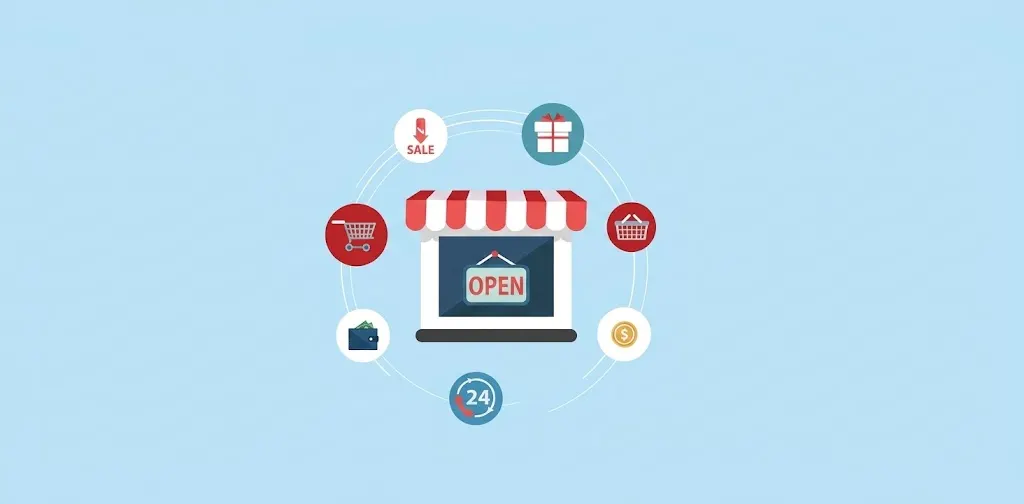
Retail businesses sell physical products, and customers want to see what is in stock before they travel or pay.
A website works like a shop window that never closes. It should display your inventory, clear prices, product details, and good photographs.
Visitors should be able to place an order or request a quote in a few taps. This saves your team from answering the same price questions all day.
- Clothing and fashion boutiques
- Kente cloth and traditional clothing sellers
- Shea butter and natural skincare brands
- Cosmetics and beauty product retailers
- Mobile phone and accessories shops
- Computer and electronics retailers
- Furniture and home décor businesses
- Jewellery and handmade accessories sellers
- Gift and souvenir shops
- Footwear and bag retailers
- Bookshops and stationery sellers
- Baby products and children’s clothing stores
- Building materials suppliers
- Agricultural equipment and farm input suppliers
- Wholesale distributors
2) Food, Catering and Hospitality Businesses
Food and hospitality businesses are built on everyday Ghanaian life, from Sunday lunches to weddings and tourist trips.
People choose these places with their eyes first, so a website helps a lot.
Show menus, food photographs, accommodation details, packages, and your location.
Add booking enquiries and clear order instructions so nobody has to guess.
A hungry or travelling customer will often pick the business that makes this easy.
- Restaurants and chop bars
- Bakeries and custom cake businesses
- Catering companies
- Food delivery businesses
- Packaged local food brands
- Palm oil and spice sellers
- Coffee shops and juice bars
- Event food vendors
- Hotels and guesthouses
- Short-stay accommodation providers
- Tour operators
- Travel agencies
- Local tour guides
- Event venues and reception centres
- Wedding and party rental businesses
3) Beauty, Fashion and Personal Care Services
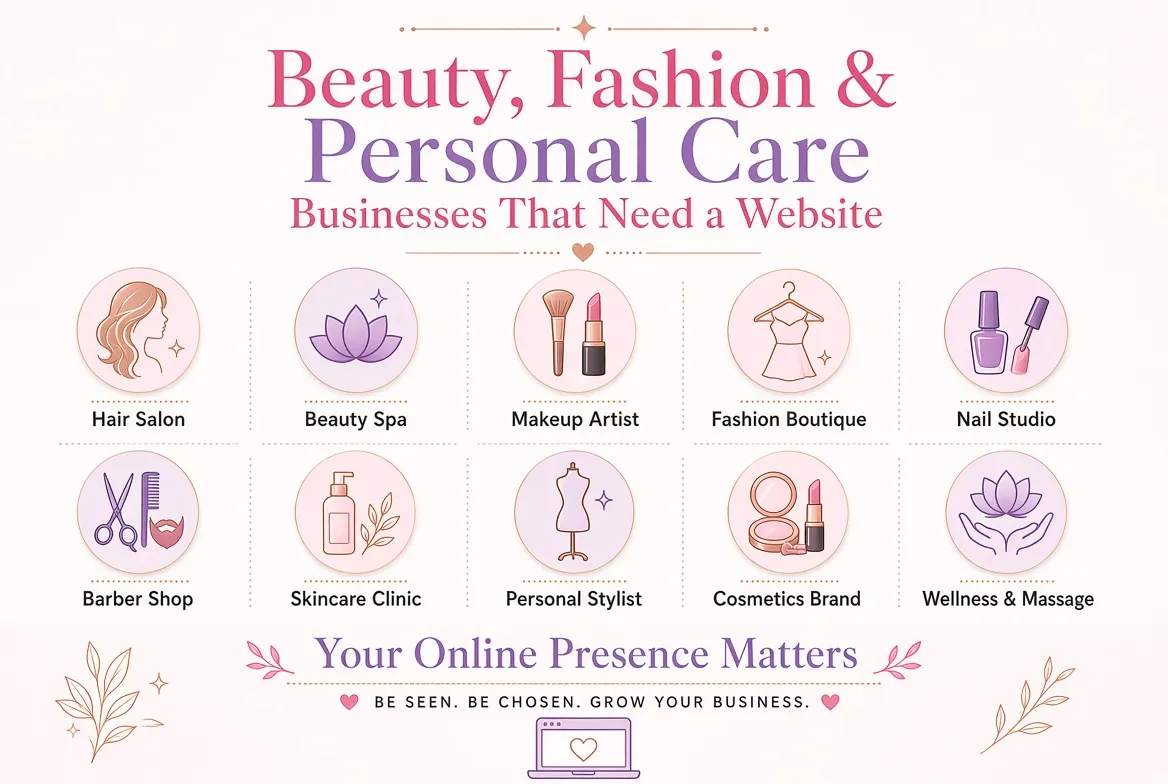
Beauty, fashion, and personal care businesses depend on portfolios, appointments, and repeat customers.
A website lets your best work speak before a client ever walks in.
Include your service menu, prices or price ranges, galleries, and your location.
Offer an appointment request form and a simple way to send enquiries.
Regular clients can then rebook quickly, and new ones can trust what they see.
- Hair salons
- Barbershops
- Nail studios
- Makeup artists
- Bridal stylists
- Fashion designers and tailors
- Seamstresses
- Spa and massage businesses
- Skincare specialists
- Beauty training academies
- Photographers specialising in fashion and portraits
- Laundry and dry-cleaning services
- Personal stylists
- Wedding dress designers and rental businesses
- Beauty product manufacturers
4) Home Improvement, Repairs and Property Services
Customers need to find, judge, and contact home service providers before they hire anyone.
Trust is the biggest hurdle, since people let you into their homes or hand over big budgets.
Your website should list the areas you serve, describe each service, and show previous projects.
Add business credentials where they apply, plus clear contact information. A quote request form then turns a curious visitor into a real lead.
- Plumbing services
- Electrical contractors
- Air-conditioning installation and repair
- Painting contractors
- Carpentry and furniture-making businesses
- Interior designers
- Construction companies
- Roofing contractors
- Cleaning companies
- Pest control services
- Landscaping and gardening services
- Moving and relocation companies
- Property management companies
- Real estate agencies
- Property developers
5) Education, Training and Professional Services
Education, training, and professional service businesses have to explain what they offer and prove they are credible.
Parents, students, and clients usually do their research before they call.
List your courses or services, qualifications, and team profiles.
Share portfolio examples and make enrolment details easy to find. Finish with a consultation booking option and an enquiry form.
- Private tutoring services
- Online tutoring businesses
- Daycare centres and nurseries
- Private schools
- Vocational training centres
- Computer training institutes
- Language schools
- Music and dance academies
- Career coaching services
- Accounting firms
- Law firms
- Marketing agencies
- Graphic design studios
- IT support and software companies
- Business consultants
6) Health, Fitness and Wellness Businesses
Health, fitness, and wellness websites should stay practical and honest. Customers want to know what you offer, when you open, and where to find you.
Show services, opening hours, locations, staff credentials where relevant, and appointment information.
Provide appropriate contact details, and never suggest that a website replaces professional medical advice.
Clear information builds confidence before anyone walks through your door.
- Private clinics
- Dental practices
- Optometry practices
- Physiotherapy centres
- Diagnostic laboratories
- Pharmacies
- Fitness centres and gyms
- Personal trainers
- Yoga and fitness instructors
- Wellness centres
- Occupational health providers
- Medical equipment suppliers
7) Agriculture, Manufacturing and Local Product Businesses
Agriculture, manufacturing, and local product businesses give Ghana its own commercial identity.
Many of them sell to buyers who live far away or even in other countries.
A website can show product catalogues, production capabilities, and distribution areas.
It should also explain wholesale enquiries and minimum order quantities. Business-to-business contact options let serious buyers reach you directly.
- Cocoa product manufacturers
- Shea butter producers
- Cashew processors
- Poultry farms
- Fish farms
- Vegetable farms
- Grain and maize suppliers
- Agro-processing businesses
- Organic fertiliser producers
- Local soap manufacturers
- Bead makers and artisans
- Pottery businesses
- Furniture manufacturers
- Textile producers
- Packaging and printing companies
8) Transport, Automotive and Logistics Businesses
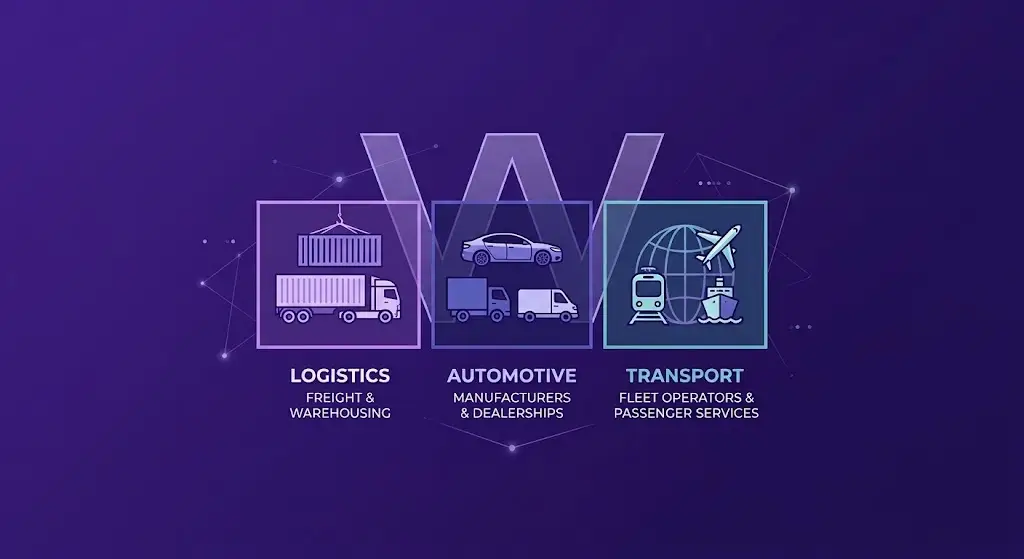
Transport, automotive, and logistics customers often need help fast, so they search online first. A website lets them compare options before they pick up the phone.
List your services, vehicle or product catalogues, service areas, and operating hours.
Include booking enquiries and quote requests. This makes your business look organised and reliable.
- Car rental companies
- Auto repair garages
- Vehicle diagnostic services
- Tyre dealers
- Car dealerships
- Driving schools
- Courier services
- Delivery companies
- Freight forwarding businesses
- Moving and storage companies
- Motorcycle repair shops
- Auto parts retailers
9) Creative, Events and Entertainment Businesses
Creative, events, and entertainment businesses sell talent, and talent needs to be seen. A website is a better home for your portfolio than a scattered social feed.
Show galleries, service packages, past projects, and your availability. Add a booking form so clients can reserve you quickly.
Client enquiries then arrive in one place instead of five different inboxes.
- Wedding planners
- Event planners
- DJs and MCs
- Event decorators
- Wedding photographers
- Videographers
- Graphic designers
- Printing businesses
- Signage and branding companies
- Music producers and recording studios
- Artists and illustrators
- Entertainment agencies
10) Tourism, Community and Other Local Services
Tourism, community, and other local services reach visitors and residents who want something specific.
A website helps them check the details before they commit. Share service details, operating hours, and your location.
Add booking or enquiry options so people can act straight away. Useful extras, like how to get there or what to bring, make a first visit smoother.
- Cultural tour operators
- Tourist attractions
- Museums and heritage sites
- Guest experience providers
- Translation services
- Recruitment agencies
- Security service providers
- Waste collection businesses
- Laundry pickup services
- Pet care businesses
Why Social Media Alone Is Not Enough
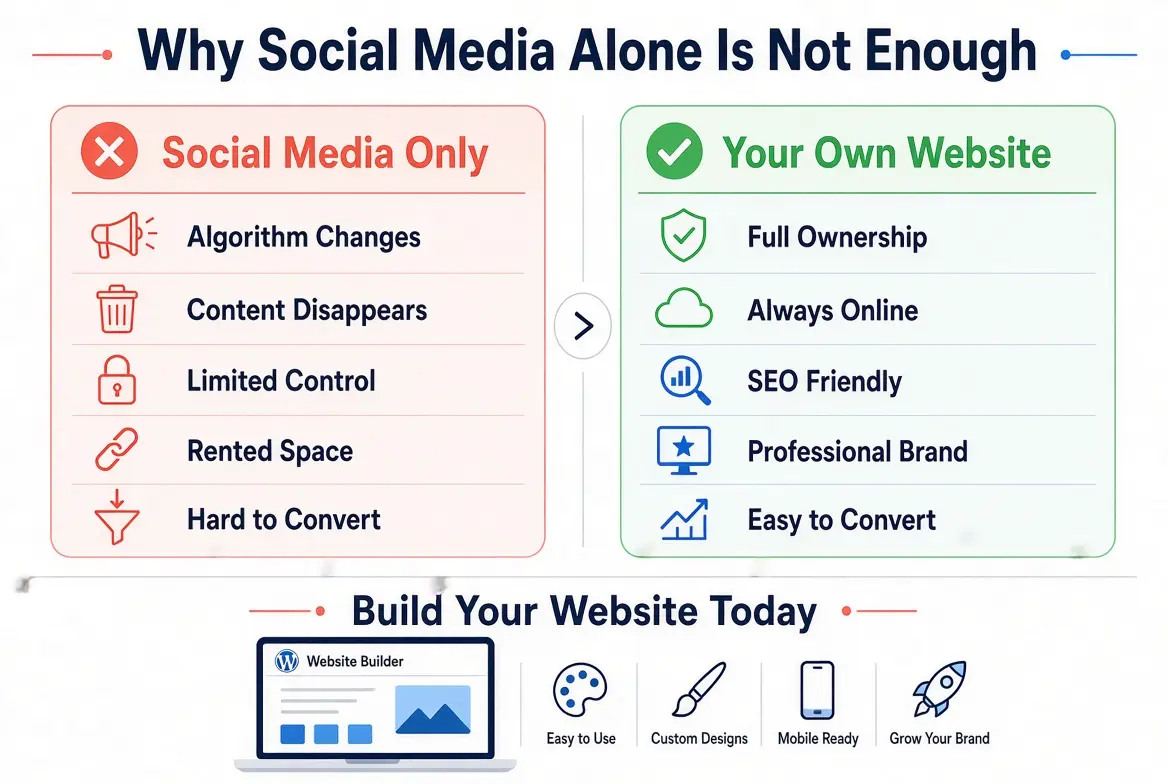
Social media is great for reach, but it has limits. Posts disappear down the feed within days, so older products and prices get buried. A
lgorithms change, and your page can lose visibility overnight. An account can also be hacked, suspended, or locked, and then your whole shop front is gone.
A website sits on a domain you own, so nobody can switch it off because of a policy change.
Search is the other gap. When someone in Kumasi types “caterer near me” or “plumber in Accra” into Google, a website gives you a real chance to appear.
A Facebook page can show up too, but it rarely tells the full story.
Many buyers also trust a business more when it has its own address online, especially for bigger purchases.
Keep your social pages active, then point every post and profile back to your site.
What Can a Website Do for a Small Business in Ghana?
A good website works for you even when you are asleep or busy with a customer. Here is what it can do in plain terms.
- Help potential customers discover your business through relevant Google searches. People search before they buy, and a site gives you a place in those results.
- Display products and services in one organised location. Customers stop scrolling through old posts and find what they need quickly.
- Provide business details when staff are unavailable. Opening hours, your address, and prices answer questions at any time of day.
- Collect enquiries and booking requests. Forms send messages straight to you, so fewer leads slip away.
- Support online orders and payments where appropriate. Some businesses can sell directly, which saves time on back and forth chats.
- Build confidence with genuine photographs, reviews, and clear business information. Real proof of your work helps a stranger decide to trust you.
- Give you more control over your online presence than a social media page can. You choose the design, the message, and what visitors see first.
How to Get a Website for Your Small Business in Ghana
Getting online is simpler than most owners expect, especially now that AI website builders can do the heavy lifting.
Instead of designing every page from scratch, you describe your business and the builder creates a first draft for you.
Most of the work then becomes checking and polishing, which you can usually finish in a weekend.
Take notes as you go, because you will reuse the same details across your site and your social pages.
- Choose a domain name that fits the business. Keep it short, easy to spell, and close to your trading name. A name that is hard to say out loud is hard to remember, so test it on a friend.
- Write a clear description of your business. AI builders work best when you give them real details. Include what you sell, where you operate, who your customers are, and the tone you want. A vague prompt gets you a vague website.
- Let the AI builder generate your first draft. Within minutes you should get a layout, page structure, and starter text. Treat it as a rough draft, not the finished product. You can regenerate sections or ask for changes until it feels right.
- Edit the text and add your own photographs. AI can write a decent first pass, but it does not know your business like you do. Replace generic wording with your real prices, services, and story. Real images of your work build more trust than stock pictures, so keep files small so pages load fast on mobile data.
- Add contact options and a way to enquire. Put your phone number, WhatsApp link, location, and opening hours where visitors can spot them quickly. Add a simple enquiry or booking form if you take orders. Most Ghanaian customers will visit from a phone, so test everything on one or two different phones.
- Choose hosting that suits the website’s requirements. A small brochure site needs less than a busy online shop. Check storage, speed, backups, and support before you pay.
- Test the website before launch. Click every link, submit every form, and ask a friend to try ordering. Read the AI-written text slowly, since it can get small details wrong. Fix anything confusing or broken before the public sees it.
If you want everything in one place, Truehost is worth checking.
Its Ghana site promotes website creation, web hosting, and domain-related services, including a website builder.
Look at the builder’s current features and confirm which AI tools it includes before you decide.
Compare what comes with each plan, such as storage, email accounts, and support, so you pay only for what your business needs.
If you are not sure where to begin, start with a domain and a simple AI-generated page, then grow from there.