 Domains SearchSearch available domain names and claim yours in just a few clicks.
 .GH DomainsFind and register a trusted .gh domain for your business or idea.
 Web HostingAffordable web hosting solutions designed for performance, uptime, and scalability.
 cPanel HostingManage your website without the stress. cPanel hosting gives you everything in one place.
 Reseller HostingCreate, manage, and grow your hosting clients using reliable reseller hosting tools.
 Windows HostingWindows hosting that works smoothly with Microsoft frameworks and applications.
 Email HostingProfessional email hosting that keeps your business communication reliable and secure.
 WordPress HostingFast and secure WordPress hosting optimized for smooth performance and easy management.
 Affiliate ProgramEarn commissions by referring customers to our hosting and domain services.
 .COM Domains
 All DomainsFind the right Ghana domain for your brand and lock it in fast.
 Domain TransferMove your domain to us with a smooth, secure transfer process.
 Whois LookupCheck domain ownership and registration details instantly with our WHOIS lookup.
 SSL CertificatesSecure your website and protect your visitors with trusted SSL certificates.
 VPS HostingUpgrade to VPS hosting today and enjoy better speed, uptime, and flexibility.
 Managed VPSManaged VPS for businesses and developers who want full control without server management worries.
 Dedicated ServersGet maximum speed and reliability with dedicated servers built for serious websites and apps.
 AI Website BuilderStart your website today with our AI builder and go live in minutes.
 Online ShopStart selling online today with your own professional online shop.
 Web Design ServiceProfessional web design services that make your brand stand out online.
 Local SEO
 BlogHelpful articles, tutorials, and updates for building your online presence.
 Contact UsNeed help or more information? Connect with us anytime.
Starting a blog shouldn’t mean draining your savings account.
Yet a lot of new bloggers get talked into hosting plans that cost far more than they need to, simply because nobody explains what’s actually important when you’re just getting started.
The good news is that cheap WordPress hosting has come a long way, and today’s budget plans can genuinely handle a growing blog without constant headaches.
That said, cheap and good value aren’t always the same thing.
Some providers hook you in with a tempting first-year price, then hit you with a painful renewal bill.
Others cut corners on support or security in ways that only become obvious once something breaks.
So, balancing cost and performance takes a bit of digging, and that’s exactly what this guide is here to help with.
Below, we’ll walk through five solid budget hosting providers worth considering in 2026, the factors that actually separate a good cheap host from a bad one, practical tips for squeezing more performance out of a tight budget, and the common mistakes that trip up first-time bloggers.
By the end, you should have a clear sense of which direction fits your situation best.
Top 5 Cheap WordPress Hosting Providers (2026)
1) Truehost
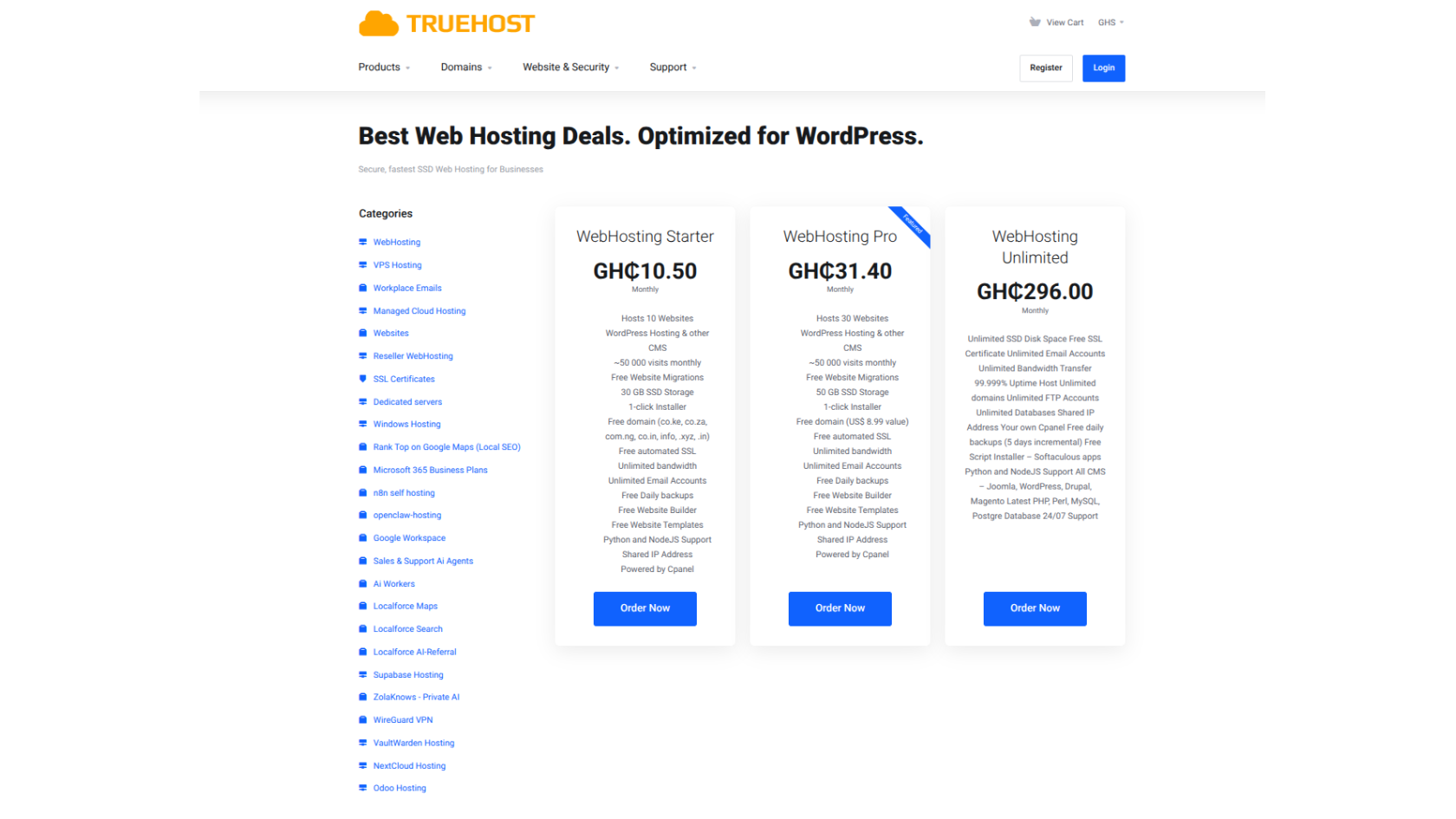
Truehost has built a strong reputation across Ghana, Nigeria, and Kenya as one of the more dependable budget options for African bloggers and small businesses.
Truehost Ghana’s plans typically start around GH₵10.50 per month.
Every account comes with a free SSL certificate, automated backups, and a Web Application Firewall, so security isn’t an afterthought here.
The cPanel interface makes it approachable for beginners, and their custom caching setup (built around tools like W3 Total Cache) is tuned specifically for WordPress performance.
Pros: Affordable local pricing, strong security defaults, beginner-friendly control panel, solid uptime record, free domain extensions on annual hosting plans, one-click install for wordpress.
Cons: Entry-level plans have modest resource caps, and support quality can vary depending on the time of day you reach out.
2) HOSTAFRICA
HOSTAFRICA is a pan-African hosting group with a significant presence in Ghana.
It offers localized services with data centers in the country, making it a strong option for businesses targeting a Ghanaian audience.
HOSTAFRICA’s specialized WordPress hosting in Ghana starts at ₵60.00 per month (approximately $10 USD).
Pros: Flexible monthly billing and cancel-anytime policy, Free .africa domain and SSL on most plans, 24/7 expert support
Cons: Starting price of ₵60/month may be higher than some local shared hosting options, Pricing and features for higher-tier plans require checking the website for current details
3) G Online Sites
Based in Ghana and operating across several African markets, G Online Sites has grown into a household name in web hosting since 2015.
The company was founded with a specific goal in mind, closing the gap between quality and affordability, and its shared hosting plans reflect that mission with unlimited storage and bandwidth offerings.
Beyond hosting, G Online Sites also handles domain registration, website design, and even mobile app development, so it can work well if you eventually want everything under one roof.
Their WordPress hosting is built on SSD-powered servers with a 99.9% uptime claim, and customer support is available through live chat, phone, email, and tickets.
Pros: Unlimited resource plans, broad service catalog beyond hosting, responsive local support, competitive African pricing.
Cons: Less globally recognized than international brands, so third-party performance benchmarks are harder to come by.
4) Hostinger
Hostinger remains one of the most talked-about names in budget hosting worldwide, and for good reason.
Its WordPress-optimized plans start at roughly $2.69 per month on a long-term contract, and the platform includes one-click WordPress installation through its hPanel dashboard, which many reviewers find more intuitive than traditional cPanel setups.
Where Hostinger really shines is scalability.
You can start on a shared plan and move up to their Cloud Startup tier, which offers dedicated resources, a free CDN, and daily backups once your traffic grows.
The catch, and it’s a significant one, is that renewal pricing jumps substantially after the introductory term ends.
A Premium plan that starts near $2 or $3 a month can renew closer to $11.
Pros: Rock-bottom introductory pricing, easy WordPress setup, strong upgrade path to cloud hosting, solid customer reviews.
Cons: Steep renewal price increases, and the cheapest plans require a lengthy 48-month commitment to get that headline rate.
5) Liquid Web
Liquid Web sits at the pricier end of this list, but it deserves a mention because its managed WordPress plans (delivered through its Nexcess platform) start around $4 to $5 per month on longer-term billing, undercutting what you might expect from a premium managed host.
That said, renewal rates climb quickly, often doubling once the introductory period ends.
What you’re paying for here is genuinely fully managed hosting: automatic updates, daily backups, a staging environment, and 24/7 support from a team that specializes in WordPress troubleshooting rather than generic hosting issues.
For a blogger who wants to grow into WooCommerce or handle serious traffic spikes, Liquid Web offers more headroom than most budget hosts.
Pros: Fully managed environment, strong uptime guarantees, staging sites included, responsive expert support.
Cons: Not the cheapest option on this list, and it’s arguably overkill for a brand-new blog with minimal traffic.
Factors to Evaluate Before Choosing a Cheap WordPress Host
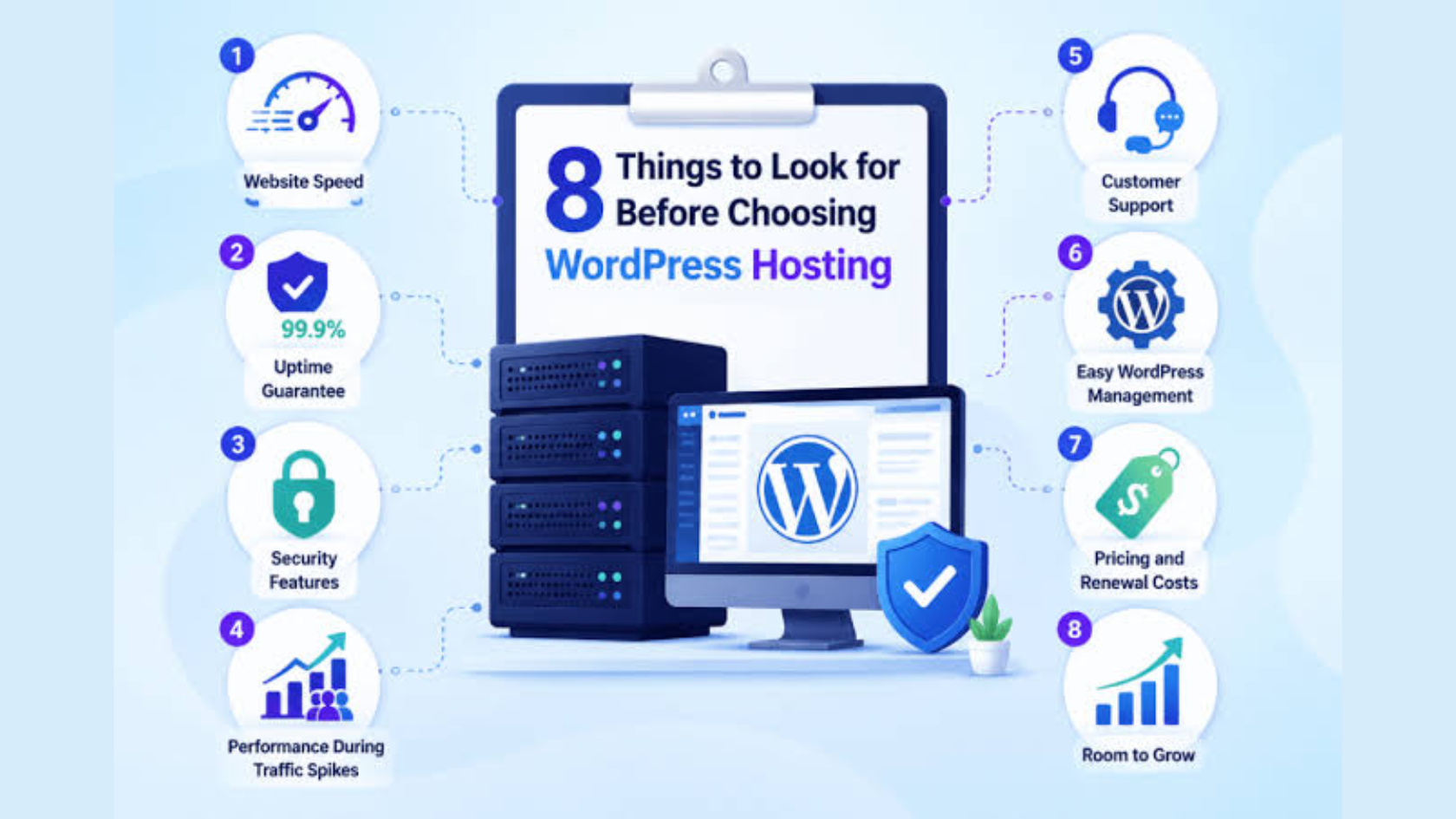
Picking a host purely on price is where a lot of bloggers go wrong. Here’s what actually deserves your attention.
- Performance metrics. Look at page load speed, uptime guarantees (99.9% should be the baseline), and how much server resource you’re actually getting. A plan that looks cheap but throttles your CPU during traffic spikes will cost you readers in the long run.
- Security features and backups. Free SSL certificates are now standard, but check whether backups are automatic and how far back you can restore. Some budget hosts only offer weekly backups, which isn’t ideal if something goes wrong mid-week.
- Scalability and upgrade paths. Your blog today won’t necessarily reflect your blog in a year. Ask whether the provider makes it simple to move from shared hosting to VPS or cloud hosting without migrating everything manually.
- Customer support quality. Live chat availability, response times, and whether the support team actually understands WordPress (rather than just generic server issues) can make a real difference when something breaks at an inconvenient hour.
- Price transparency and renewal rates. This is the one that catches people off guard most often. Always check the renewal price, not just the introductory offer, since some providers increase costs by 200% or more after the first term.
Tips for Maximizing Performance on a Budget
Even the cheapest hosting plan can perform well if you optimize what’s under your control.
- Optimize images and plugins. Compress images before uploading, and periodically audit your plugin list. Every inactive or poorly coded plugin adds load time and, in some cases, security risk.
- Use a lightweight theme. Heavy, feature-packed themes often include code you’ll never use. A minimal, well-coded theme reduces server strain and keeps your site snappy, particularly on shared hosting.
- Leverage caching mechanisms. Caching plugins store a static version of your pages so your server doesn’t have to rebuild them for every visitor. This alone can meaningfully cut load times on budget hosting.
- Implement a CDN where possible. A content delivery network stores copies of your site closer to your visitors geographically, which reduces load times significantly, especially if your audience is spread across different regions.
Common Pitfalls to Avoid with Cheap WordPress Hosting
Even with a solid host, a few habits can undo all your savings.
- Overloading shared resources. Running too many high-traffic plugins or a resource-heavy theme on a basic shared plan can slow your entire site down, sometimes to the point of triggering suspension notices from your host.
- Ignoring renewal price hikes. As mentioned above, this is one of the most common budget-hosting traps. Mark your renewal date and compare prices elsewhere before it auto-renews.
- Relying solely on free backups. Host-provided backups are helpful, but they’re not a substitute for your own backup routine. A dedicated backup plugin gives you more control over what gets saved and when.
- Skipping security plugins. Free SSL is great, but it’s not a complete security solution. A basic security plugin adds firewall protection, login attempt limits, and malware scanning that most budget hosts don’t include by default.
Go For a Good WordPress Hosting Provider
Choosing the right cheap WordPress host really comes down to matching your budget against what you actually need right now, not what you might need someday.
If you’re just starting out and want something dependable at a low local price, Truehost Ghana offers solid entry points with reasonable performance.
G Online Sites is worth a look if you want an all-in-one provider handling hosting, domains, and design together.
Hostinger remains hard to beat globally on introductory pricing, provided you keep an eye on that renewal jump, while Liquid Web makes sense once your blog outgrows shared hosting and you’re ready to invest in fully managed performance.
Whichever provider you land on, remember that the cheapest plan upfront isn’t always the cheapest plan over time.
Factor in renewal rates, backup policies, and support quality before committing.
Once your blog is live, the next step is simply watching how it grows.
Keep tabs on your traffic, storage use, and load times every few months, and don’t hesitate to upgrade your plan the moment your current one starts to feel tight.
A little proactive scaling now saves you a much bigger migration headache later. So,choose Truehost WordPress hosting plans!